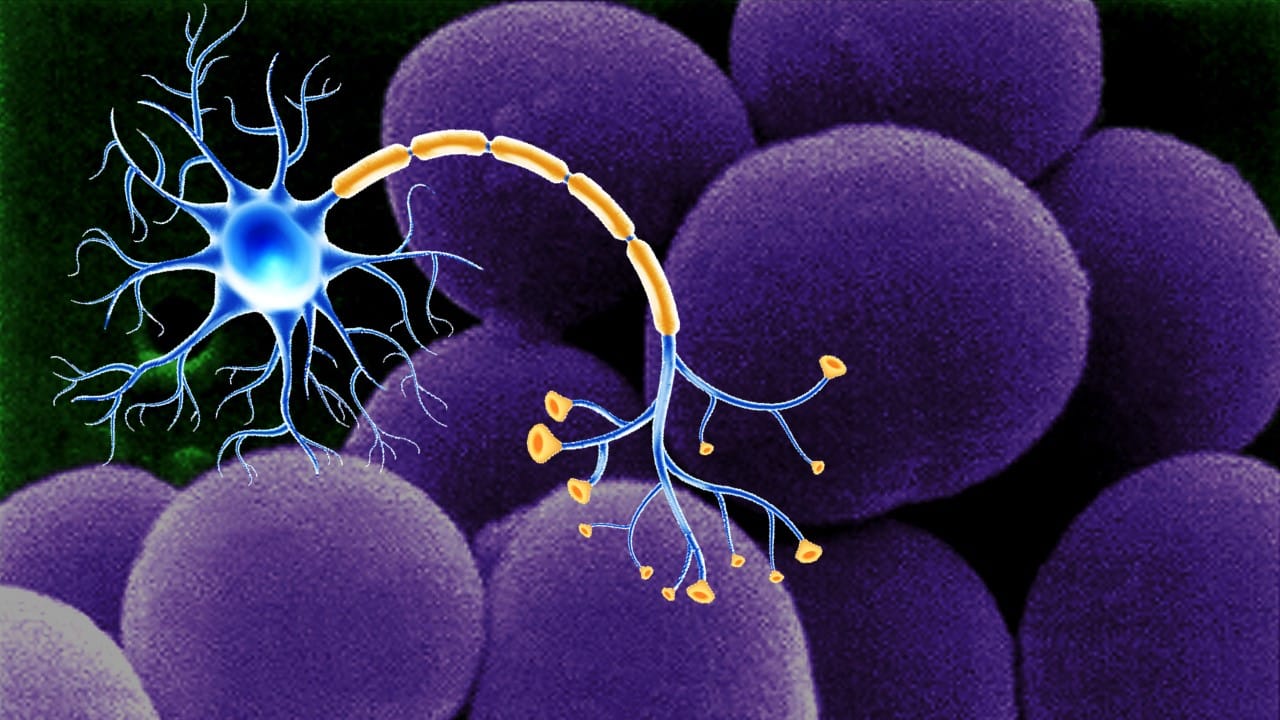
In the 1960s/1970s, it became clear that stress alters immune function (viewpoint of March 28,2024). One publication in 1983 found that controllability or coping of stress is decisive for immunosuppression.
Viewpoint On:
Laudenslager ML, Ryan SM, Drugan RC, Hyson RL, Maier SF. Coping and immunosuppression: inescapable but not escapable shock suppresses lymphocyte proliferation. Science. 1983;221(4610):568-570
The first and senior author
Mark L. Laudenslager (1947 – 2020) received his PhD in 1976 from the University of California, Santa Barbara, followed by a postdoc at the Scripps Institute of Oceanography in San Diego. His first publication in the context of his PhD studies appeared in Nature (1). In 1980, as a postdoctoral trainee, he moved to the Department of Psychiatry, University of Colorado School of Medicine, Denver. Beginning in 1995, he served as Director of the UCHSC-Primate Research Facility for six years. ln the same year, Mark L. Laudenslager was elected as Developmental Psychobiology Research Group (DPRG) Executive Director and continued as a major influence in the DPRG, serving again as Executive Director from 2007-2010. He became a full professor in the same institute in 2008. He received the 2013 Norman Cousins Award from the Psychoneurolmmunology Research Society (PNIRS). In December 2020, he died from a Covid-19 infection.
Steven F. Maier (1943) graduated from the Bronx High School of Science in 1959 and from New York University (NYU) in 1963. He received his PhD in 1968 from the University of Pennsylvania, Philadelphia, and he has been at the University of Colorado at Boulder, since 1973. He received the 2002 Norman Cousins Award from the Psychoneurolmmunology Research Society (PNIRS) and he is winner of the Award for Distinguished Scientific Contributions of the American Psychological Association. Presently, he is Distinguished Professor and Director of the Center for Neuroscience at the University Colorado Boulder.
The starting point
In the year 1967, Seligman and Maier published a seminal paper on the “Failure to escape traumatic shock” (2). The publication deals with escapable and inescapable shock, and it was the platform of a depression model called “learned helplessness.” In the early 1980s, in Colorado, Maier was approached by Laudenslager about collaborating on some studies designed to determine whether and how stress might alter immune function. They hypothesized that immune function was differently influenced by controllability of the stressor.
The discovery
Rats were placed in a small “wheel-turn” box and shock was applied through fixed tail electrodes (3). Each escapable shock ended when the subject turned the wheel in the front of the chamber. Twelve rats were given an average of one escapable shock per minute, for a total of eighty shocks. A second group of twelve rats received inescapable shock. Each was paired with an escapable shock subject; shocks began at the same time as for the escapable shock subject and ended when the latter responded. A third group (N = 8) was restrained in the apparatus for an equivalent period of time but was not shocked (control group). Twenty-four hours later all three groups were given five 5-second, 0.6-mA footshocks in a shuttle box. Blood was then collected. They used a simple immunological test that investigated mitogen-induced proliferation of lymphocytes in vitro (mitogens: Concanavalin A and phytohemagglutinin; proliferation test with [methyl-3H]thymidine) (3). They wrote:
Neither exposure to escapable shock nor restraint stress affected lymphocyte proliferation. However, inescapable shock was associated with suppression of lymphocyte proliferation. Thus, a single session of eighty brief shocks moderate intensity can substantially inhibit lymphocyte proliferation in vitro if the subject has no control over the shocks. However, identical shocks produce no decrease in proliferation if the subject can escape them. Thus, the ability to exert control over the stressor completely prevented immunosuppression.
Criticism
Although a first seminal paper like the one of Mark L. Laudenslager et al. can stimulate a whole research field, it can also induce a lot of criticism because other authors find different things. The first group of authors that publicly criticized the work were the authors themselves (4). From my point of view, this is a respectable sign of good scientific behavior. They discussed that the results were highly variable depending on many individual parameters. They also recognized that the immune parameter, whether lymphocyte proliferation or antigen-induced antibody production, can influence the direction of the results (4). Nevertheless, immunosuppression after inescapable shock was confirmed by several studies of other authors (5-9, and several more), but these studies also demonstrated the variable influences of the environment. While in the 1980s, most researchers in the field of PsychoNeuroImmunology thought that stress – particularly strong stress – inhibits immune functions, this picture has changed to the opposite direction during the 1990s (10-12), later summarized in a seminal review (13). From this point of view, stress can have immunosuppressive (when strong and long-standing) but also immunoactivating functions (when acute).
Neuroimmunomodulation also published a paper of the senior author (14). This time, inescapable shock helped to resolve bacteria-induced skin inflammation significantly faster in challenged than in non-stressed rats (14). This latter publication corresponded to the general picture of the late 1990s.
References
- Carlisle HJ, Laudenslager ML. Inhibition of airlicking in thirsty rats by cooling the preoptic area. Nature. 1975;255(5503):72-73
- Seligman ME, Maier SF. Failure to escape traumatic shock. J Exp Psychol. 1967;74:1-9
- Laudenslager ML, Ryan SM, Drugan RC, Hyson RL, Maier SF. Coping and immunosuppression: inescapable but not escapable shock suppresses lymphocyte proliferation. Science. 1983;221(4610):568-570
- Maier SF, Laudenslager ML. Inescapable shock, shock controllability, and mitogen stimulated lymphocyte proliferation. Brain Behav Immun. 1988;2:87-91
- Bukilica M, Djordjević S, Marić I, Dimitrijević M, Marković BM, Janković BD. Stress-induced suppression of experimental allergic encephalomyelitis in the rat. Int J Neurosci. 1991;59:167-175
- Zalcman S, Richter M, Anisman H. Alterations of immune functioning following exposure to stressor-related cues. Brain Behav Immun. 1989;3:99-109
- Sandi C, Borrell J, Guaza C. Behavioral factors in stress-induced immunomodulation. Behav Brain Res. 1992;48:95-98
- Fleshner M, Watkins LR, Lockwood LL, Bellgrau D, Laudenslager ML, Maier SF. Specific changes in lymphocyte subpopulations: a potential mechanism for stress-induced immunomodulation. J Neuroimmunol. 1992;41:131-142
- Kusnecov AW, Rabin BS. Inescapable footshock exposure differentially alters antigen- and mitogen-stimulated spleen cell proliferation in rats. J Neuroimmunol. 1993;44:33-42
- Dhabhar FS, McEwen BS. Stress-induced enhancement of antigen-specific cell-mediated immunity. J Immunol. 1996;156:2608-2615
- Dhabhar FS, McEwen BS. Acute stress enhances while chronic stress suppresses cell-mediated immunity in vivo: a potential role for leukocyte trafficking. Brain Behav Immun. 1997;11:286-306
- Dhabhar FS, McEwen BS. Enhancing versus suppressive effects of stress hormones on skin immune function. Proc Natl Acad Sci U S A. 1999;96:1059-1064
- Dhabhar FS. The short-term stress response – Mother nature’s mechanism for enhancing protection and performance under conditions of threat, challenge, and opportunity. Front Neuroendocrinol. 2018;49:175-192
- Deak T, Nguyen KT, Fleshner M, Watkins LR, Maier SF. Acute stress may facilitate recovery from a subcutaneous bacterial challenge. Neuroimmunomodulation. 1999;6:344-354
(Featured image declaration: Modified from Bennett from Flickr and NIAID from Flickr and Flickr)