Diurnal changes of bodily rhythms are known for long, e.g., heart rate or body temperature (1, 2). This blog demonstrates the first paper showing diurnal influences on an immune parameter.
This blog was co-authored by Rainer Straub and Maurizio Cutolo, respectively Editor-in-Chief and Editorial Board Member for Neuroimmunomodulation.
Viewpoint On:
Elmadjian F, Pincus G. A study of the diurnal variations in circulating lymphocytes in normal and psychotic subjects. J Clin Endocrinol Metab. 1946;6:287-294. PMID: 21025121.
The authors
Fred Elmadjian (1915-2000) was born Aleppo, Syria, of Armenian parents. His father, a physician, and family emigrated to the U.S. in 1923. Fred Elmadjian was educated at the Boston Latin School, Massachusetts College of Pharmacy (B.S. and M.S.), Clark University (M.A.), and Tufts College (Ph.D.). His goal from an early age was to become a research scientist in a medical field. At Clark University he met Drs. Hudson Hoagland, then Chair of the Dept. of Biology, and Gregory Pincus. Soon he was hired as a laboratory assistant to Gregory Pincus in the Clark University Physiological Research Laboratory, and two years later he followed the two professors to the Worcester Foundation for Experimental Biology (WFEB). Elmadjian worked with Gregory Pincus for twenty years, always as a member of the WFEB, but for many years also as Director of Biological Research and Director of Laboratories at Worcester State Hospital. More information can be found on the following homepage (3).
Gregory Pincus (1903-1967) was one of five siblings born in Woodbine, New Jersey, to immigrant parents of Russian Jewish origin. Pincus won a scholarship to Cornell University, where he excelled in biology. He went on to Harvard as an assistant professor, and he soon became known for his creative and innovative research in mammalian sexual physiology. In 1934, at age 31, Pincus made national headlines by achieving in-vitro fertilization of rabbits. Because he was depicted in the press as a “Dr. Frankenstein”, Harvard University denied him tenure and refused his reappointment. Pincus’s career floundered.
With the country deep in the Great Depression, Pincus was desperate to find a way to support his family. An old friend from Harvard, Hudson Hoagland, came to the rescue. Hoagland invited Pincus to work out of his biology department at Clark University in Worcester, Massachusetts, as a visiting professor of zoology. Pincus accepted the offer. The pair worked well together, and in 1944, Hoagland and Pincus established the Worcester Foundation for Experimental Biology (WFEB). The foundation soon found a niche doing applied research, especially in the burgeoning area of steroids, but it was still a struggle to stay solvent.
In 1951, Margaret Sanger met Pincus at a dinner hosted by Abraham Stone, the director of the Margaret Sanger Research Bureau and medical director and vice president of the Planned Parenthood Federation of America (PPFA) and procured a small grant from the PPFA for Pincus to begin hormonal contraceptive research. Pincus, along with Min Chueh Chang, confirmed earlier research that progesterone would act as an inhibitor to ovulation. With the help of the pharmaceutical company Searle, Pincus launched the first studies on contraceptive pills in the mid-1950s, and in 1960 the U.S. Food and Drug Administration approved Searle’s drug for contraception use. Pincus – one of the fathers of the anti-baby pill – was elected to the National Academy of Sciences. However, a few years later, at the age of 67, he died from a bone marrow disease. More information can be found on the following homepages (4,5).
The starting point
In a paper of the year 1943, Pincus described the diurnal rhythm in the excretion of urinary ketosteroids by young man (6). This research work already demonstrated his primary interest in stressful life events and secondary in circadian rhythms. In this paper, Pincus wrote: “The probability that the 17-ketosteroid excretion is an index of adrenal steroid secretion offers an interesting basis for suggesting a neuro-endocrine mechanism [AU: for circadian rhythms].”
One year later, in 1944, Dougherty and White described the influence of administration of certain active adrenal cortical steroids and adrenocorticotropic hormone on presence of lymphocytes in the blood. They observed that injection produces within a few hours an absolute lymphopenia and an increase in polymorphonuclear leucocytes (7).
The discovery
In the original work (8), the two authors asked themselves whether the diurnal rhythm of ketosteroids, which they discovered a year before (6), would translate into diurnal variations of lymphocytes in the circulation. If injections of steroids change lymphocyte numbers, the spontaneous diurnal change of these steroids may induce circadian variations in lymphocyte numbers. The authors wrote:
“The normal subjects exhibited a regular increase in the absolute number of circulating lymphocytes from waking through the rest of the day and night, with a rather abrupt drop from sleep levels after waking in the morning. … It is suggested that the diurnal increase in blood lymphocytes indicates declining adrenal cortex secretion throughout the day. This accords with the previous finding of a diurnal decrease in 17-ketosteroid output.”
Discussion
This simple experiment showed – for the first time – that neuroendocrine pathways starting from the circadian pacemaker in the nucleus suprachiasmaticus (9) are perfectly linked to changes in immune parameters. Hall, Rosbash, and Young discovered the exact molecular pathways (10). In later studies, many other immunological parameters were found to undulate according to the circadian rhythm (11, 12 and ref.13 summarized the situation in rheumatic diseases). Diurnal rhythmicity of immune parameters in patients with rheumatic diseases prompted early studies on the circadian application of glucocorticoids (14, 15), which finally led to a new form of chronotherapy (summarized in ref.16 and 17). Circadian rhythmicity of immunity is an excellent example of how brain and immune system communicate (18).
Neuroimmunomodulation also published papers on the link between circadian rhythms and immune function (19-24).
References
- Knox R. Observations on the diurnal revolutions of the pulse. Edinb Med Surg J 1815;11(42):164-167
- Preston ED. Diurnal range of temperatures. Science 1900;11(284):913
- https://oac.cdlib.org/findaid/ark:/13030/c85q4wq0/
- https://en.wikipedia.org/wiki/Gregory_G._Pincus
- https://www.pbs.org/wgbh/americanexperience/features/gregory-pincus-1903-1967/
- Pincus G. A diurnal rhythm in the excretion of urinary ketosteroids by young men. J Clin Endocrinol 1943;3(4):195–199
- Dougherty TF, White A. Influence of hormones on tissue structure and function. The role of the pituitary adrenotrophic hormone in the regulation of the lymphocytes and other cellular elements of the blood. Endocrinology 1944;85(1):1-14.
- Elmadjian F, Pincus G. A study of the diurnal variations in circulating lymphocytes in normal and psychotic subjects. J Clin Endocrinol Metab. 1946;6:287-294
- Moore RY, Eichler VB. Loss of a circadian adrenal corticosterone rhythm following suprachiasmatic lesions in the rat. Brain Research 1972;42:201–206
- https://www.nobelprize.org/prizes/medicine/2017/press-release/
- Halberg F, Visscher MB. Regular diurnal physiological variation in eosinophil levels in five stocks of mice. Proc Soc Exp Biol Med. 1950;75(3):846-847
- Lange T, Luebber F, Grasshoff H, Besedovsky L. The contribution of sleep to the neuroendocrine regulation of rhythms in human leukocyte traffic. Semin Immunopathol. 2022;44:239-254
- Straub RH, Cutolo M. Circadian rhythms in rheumatoid arthritis: implications for pathophysiology and therapeutic management. Arthritis Rheum. 2007;56:399-408
- Kirkham BW, Panayi GS. Diurnal periodicity of cortisol secretion, immune reactivity and disease activity in rheumatoid arthritis: implications for steroid treatment. Br J Rheumatol 1989;28:154–157
- Arvidson NG, Gudbjornsson B, Larsson A, Hallgren R. The timing of glucocorticoid administration in rheumatoid arthritis. Ann Rheum Dis 1997;56:27–31
- Spies CM, Cutolo M, Straub RH, Burmester GR, Buttgereit F. Prednisone chronotherapy. Clin Exp Rheumatol. 2011;29(5 Suppl 68):S42-S45
- Cutolo M, Sulli A, Pincus T. Circadian use of glucocorticoids in rheumatoid arthritis. Neuroimmunomodulation. 2015;22(1-2):33-39
- Du LY, Keerthisinghe P, Rolland L, Sung YJ, Darroch H, Linnerz T, Ashimbayeva E, Grant MJ, Kakadia PM, Ramachandran A, Tups A, Spaink HP, Bohlander SK, Cheeseman J, Crosier PS, Astin JW, Warman G, Hall CJ. A light-regulated circadian timer optimizes neutrophil bactericidal activity to boost daytime immunity. Sci Immunol. 2025;10(107):eadn3080. doi: 10.1126/sciimmunol.adn3080
- Licinio J, Wong ML, Altemus M, Bongiorno PB, Bernat A, Brabant G, Tamarkin L, Gold PW. Pulsatility of 24-hour concentrations of circulating interleukin-1-alpha in healthy women: analysis of integrated basal levels, discrete pulse properties, and correlation with simultaneous interleukin-2 concentrations. Neuroimmunomodulation. 1994;1(4):242-250
- Bredow S, Guha-Thakurta N, Taishi P, Obál F Jr, Krueger JM. Diurnal variations of tumor necrosis factor alpha mRNA and alpha-tubulin mRNA in rat brain. 1997;4(2):84-90
- Esquifino AI, García Bonacho M, Arce A, Cutrera RA, Cardinali DP. Age-dependent changes in 24-hour rhythms of thymic and circulating growth hormone and adrenocorticotropin in rats injected with Freund’s adjuvant. Neuroimmunomodulation. 2001;9(5):237-246
- Vgontzas AN, Bixler EO, Lin HM, Prolo P, Trakada G, Chrousos GP. IL-6 and its circadian secretion in humans. Neuroimmunomodulation. 2005;12(3):131-140
- Ball TM. Cortisol circadian rhythms and stress responses in infants at risk of allergic disease. Neuroimmunomodulation. 2006;13:294-300
- Alten R, Wiebe E. Hypothalamic-pituitary-adrenal axis function in patients with rheumatoid arthritis treated with different glucocorticoid approaches. Neuroimmunomodulation. 2015;22(1-2):83-88
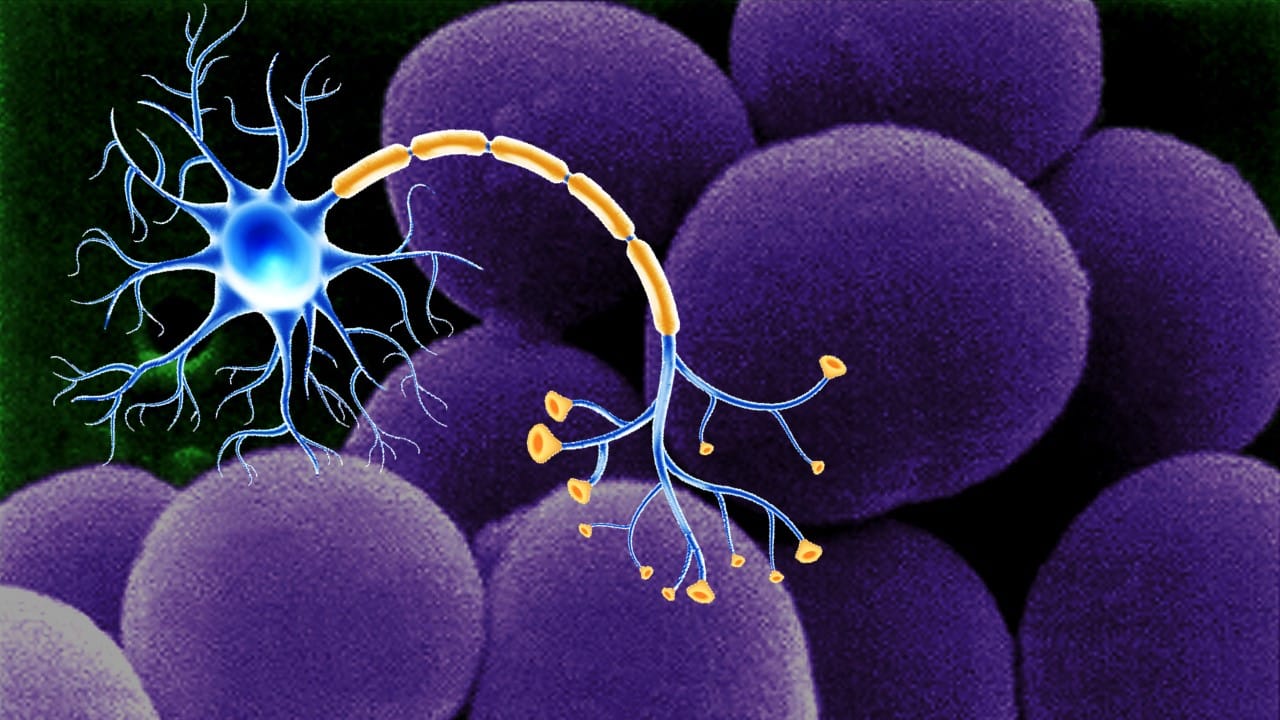
(Featured image declaration: Modified from feepik NIAID Visual & Medical Arts. (10/7/2024). Neutrophil. NIAID NIH BIOART Source. bioart.niaid.nih.gov/bioart/379)