Viewpoint On:
Janković BD, Isaković K. Neuro-endocrine correlates of immune response. I. Effects of brain lesions on antibody production, Arthus reactivity and delayed hypersensitivity in the rat. Int Arch Allergy Appl Immunol. 1973;45:360-372
Branislav D. Janković (1920-1994) studied Medicine at the Belgrade University School of Medicine and graduated in 1947 (ref. 1). He then went on to pursue Ph.D. training in Immunology which he finished in 1954. In 1964, he became full professor of Microbiology and Immunology. Between, 1954 to 1985, he was director of the Institute of Microbiology and Immunology at the School of Pharmacy in Belgrade. During this time, he founded two other research centers in former Yugoslavia: in 1965, the International Laboratory for Brain Research (Dobrota, Montenegro); in 1969, the lmmunology Research Center (Belgrade, Serbia). He was co-founder of the European Federation of Immunological Societies (EFIS) in 1975 and of the International Society for Neuroimmunomodulation (ISNIM) in 1986. In 1991, he became President of the Science Society of Serbia (ref. 1).
Katarina Isaković was born in Lalić in 1926 (ref. 2). She graduated from the Belgrade University School of Medicine in 1953 and defended her PhD thesis in the field of immunology in 1962. In 1956, she entered the Institute of Microbiology and Immunology, where she remained until her retirement in 1992. She became full professor in 1977. She contributed to the foundation and development of the lmmunology Research Center (Belgrade, Serbia), and she was Director of the Center between 1985-1990. The period between 1963 and 1964 she spent at Yale University, USA, and she also spent some time in Belgium, Switzerland and Finland. She is a member of the Serbian Scientific Society and Society of Yugoslav Immunologists (one of its founders) (ref. 2).
The idea
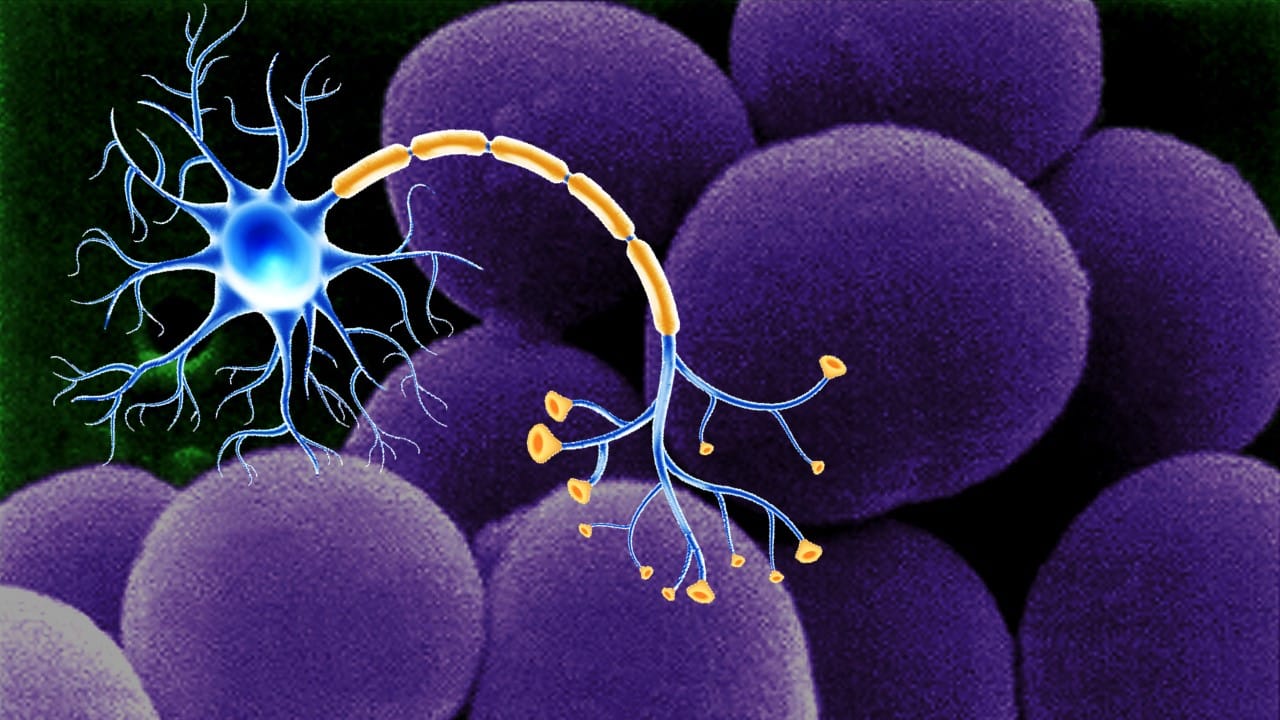
The authors wished to study possible links between the brain and the immune system in the sense of neuroimmunomodulation (3). For these studies, they lesioned certain areas in the brain and, afterwards, checked the humoral and cellular immune response to an immunization with bovine serum albumin (BSA).
The discovery
In order to check for possible connections, they lesioned different areas in the brain by means of electrolytic defects applied through stainless steel electrodes. Lesions were directed towards the following structures (postmortem identification): hypothalamus, reticular formation, thalamus, superior colliculus, caudate nucleus, and amygdala. They included a large number of verum and control animals. Immunization with BSA was performed 24 hours after brain lesioning, and skin hypersensitivity and anti-BSA-antibody response were tested 10, 20, and 30 days after immunization. Lesioning of the hypothalamus and the reticular formation led to clear reductions in skin hypersensitivity and anti-BSA-antibody response. In the discussion to this paper (3), the authors demonstrated – in figures 5 to 8 – very nice explanations how the brain might interfere with the immune system through endocrine and neuronal pathways. The mentioned speculative pathways in figures 5-8 have been confirmed in later decades.
E.g., original figure 5 of reference 3 (copyrights by Karger, Basel, Switzerland):
Neuro-Endocrine System and Immune Response

Fig. 5. Scheme of the relationship between the lymphatic cells, and the anterior hypothalamus, adenohypophysis, adrenals and gonades.
The publication of Janković and Isaković was supported by their own work from the same year (4), where the two authors demonstrated morphological changes in lymphatic organs upon electrolytic brain lesions.
The central nervous system regulation of immune reactions stood the test of time, and Neuroimmunomodulation published some relevant experiments with brain lesions (5-9).
References
- Marković BM, Dimitrijević M, Radulovic J, Laban O. In Memoriam – Branislav. D. Janković (1920-1994). Brain Behav Immun 1994;8:279-281
- From: https://nds.edu.rs/clanovi/prof-dr-katarina-z-isakovic/?lang=lat
- Janković BD, Isaković K. Neuro-endocrine correlates of immune response. I. Effects of brain lesions on antibody production, Arthus reactivity and delayed hypersensitivity in the rat. Int Arch Allergy Appl Immunol. 1973;45:360-372
- Isaković K, Janković BD. Neuro-endocrine correlates of immune response. II. Changes in the lymphatic organs of brain-lesioned rats. Int Arch Allergy Appl Immunol. 1973;45:373-384
- Gushchin GV, Jakovleva EE, Kataeva GV, Korneva EA, Gajewski M, Grabczewska E, Laskowska-Bozek H, Maslinski W, Ryzewski J. Muscarinic cholinergic receptors of rat lymphocytes: effect of antigen stimulation and local brain lesion. Neuroimmunomodulation 1994;1:259-264
- Tsuboi H, Miyazawa H, Wenner M, Iimori H, Kawamura N. Lesions in lateral hypothalamic areas increase splenocyte apoptosis. Neuroimmunomodulation 2001;9:1-5
- Irie M, Nagata S, Endo Y. Anterior hypothalamic lesions inhibit antigen-induced airway eosinophilia in rats. Neuroimmunomodulation. 2002-2003;10:305-309
- Hahm ET, Lee JJ, Lee WK, Bae HS, Min BI, Cho YW. Electroacupuncture enhancement of natural killer cell activity suppressed by anterior hypothalamic lesions in rats. Neuroimmunomodulation. 2004;11:268-272
- Dutta G, Mondal N, Goswami A, Majumdar D, Ghosh T. Effects of electrolytic lesion of medial septum on some immune responses in rats. Neuroimmunomodulation 2011;18:232-239
(Featured image declaration: Modified from kjpargeter on Freepik and NIAID on Flickr)